
The Rapid Growth of AI Amplifies the Dominance of Google, Meta, and Amazon in the Digital Ad Market Instead of Creating New Competition
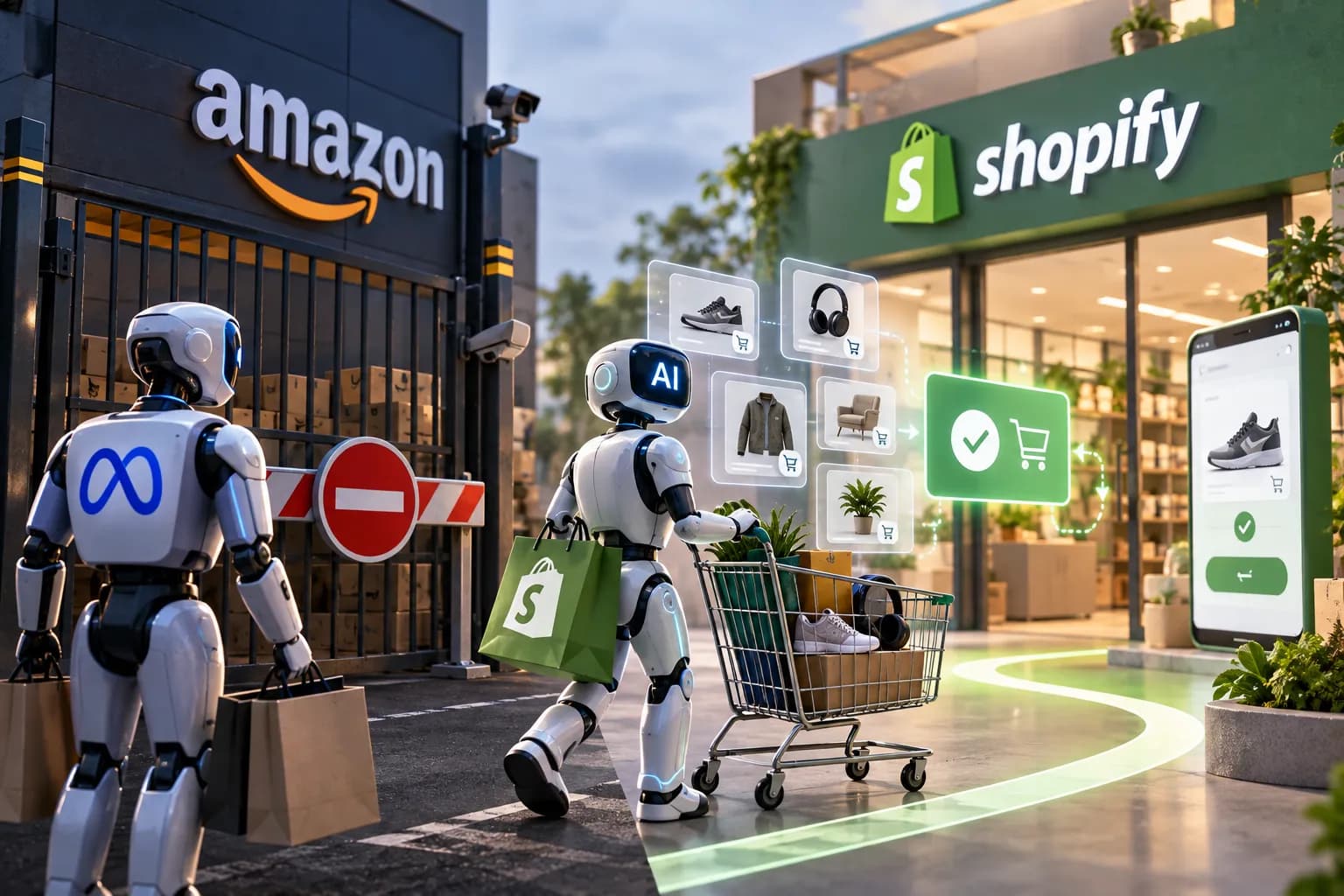
While it was expected that the development of artificial intelligence would open doors for new and smaller competitors, recent data proves the opposite; AI is actually consolidating the dominance of tech giants like Google, Meta, and Amazon in the advertising market.
According to an analysis by Digiday based on data from Madison & Wall, these three companies together controlled 56% of total U.S. advertising revenue (excluding political ads) in 2025, compared to just 53% in 2024.
During that period, Google's market share rose from 28% to 29%, Meta's from 17% to 19%, and Amazon's from 8% to 9%. In contrast, the combined share of all other companies and platforms dropped from 47% to 43%. But the question remains: What is the role of AI in this shift?
All three platforms are rapidly shifting toward automated systems for ad management. For instance, Google (through Performance Max and AI Max) and Meta (through Advantage+) are delegating a significant portion of core tasks—such as audience targeting, ad placement, bidding, and budget allocation—to algorithms and artificial intelligence.
Projections from Madison & Wall indicate that in 2026, approximately 12% of U.S. ad spending will be managed through automated campaigns or AI. This represents massive growth compared to a mere 2% in 2023, and the figure is expected to reach 27% of the total market by 2030.
This trend toward automation heavily favors the giant platforms. The more ad spend is routed through automated systems, the more data these platforms collect to refine their algorithms. As the systems deliver better results, advertisers are compelled to allocate larger budgets. This creates a closed feedback loop that reinforces the monopoly and power of these companies, with their combined market share expected to reach 58% in 2026 and continue rising in the years to follow.
For marketing professionals, this is not merely a simple technological shift. When AI independently decides where the budget is spent, which user is targeted, and which ad is displayed, a massive amount of authority and campaign control transfers from the advertiser directly into the hands of the platforms.
This raises a serious question regarding transparency: How can advertisers be certain that the algorithm is spending their budget in the most optimal way for their benefit, rather than simply optimizing metrics to serve the platform's own interests?
Ultimately, AI in the advertising market is not just a new tool; it is fundamentally redrawing the map of power and capital distribution. If this trend continues, instead of breaking the monopoly of the major platforms, it will make Google, Meta, and Amazon more dominant and powerful than ever before.