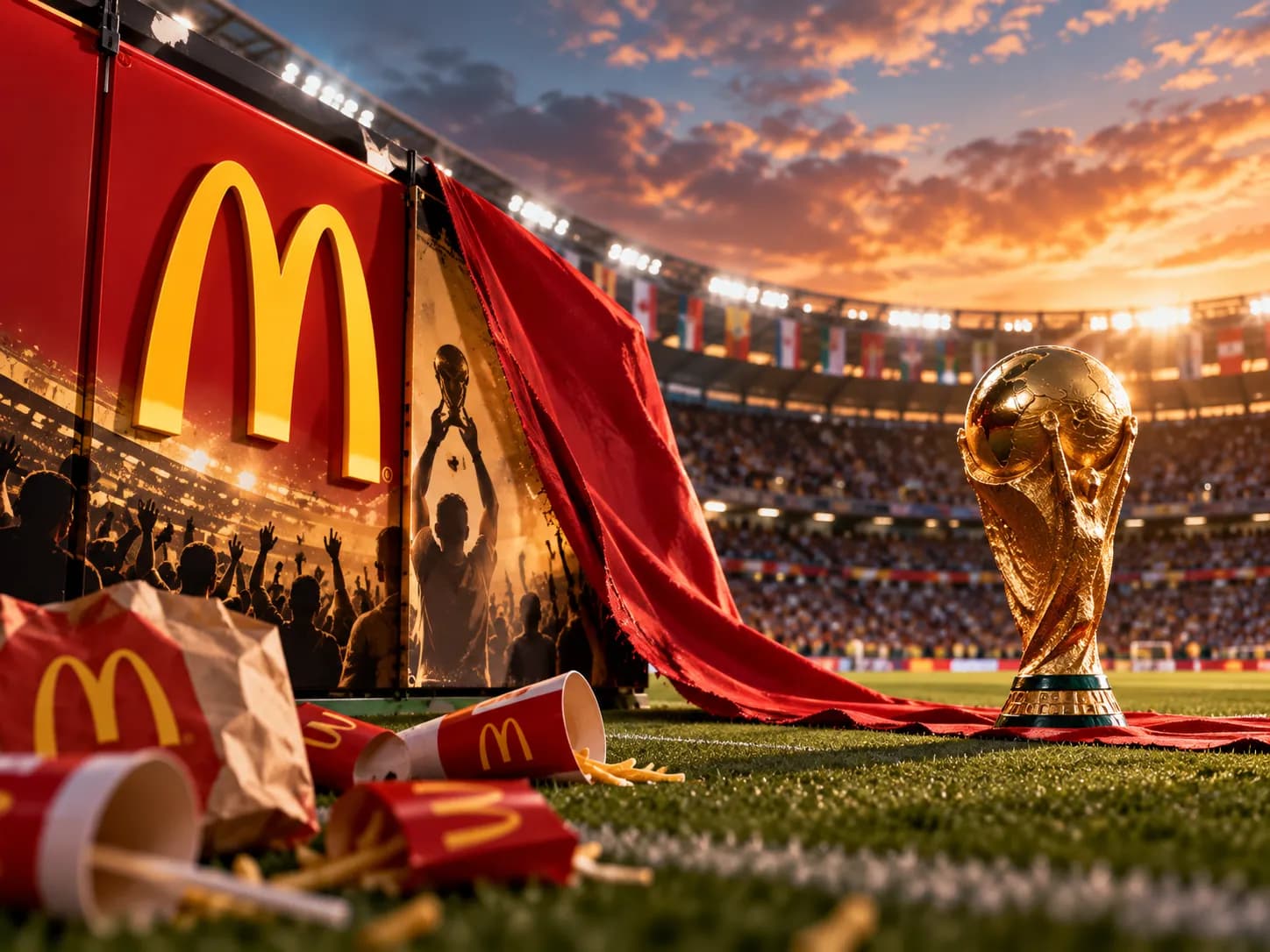

End of an Era; Why Did McDonald’s End Its 32-Year World Cup Sponsorship?
«After 32 years of a historic partnership, McDonald’s has decided to end its sponsorship of the FIFA World Cup; a decision that likely signals a much larger shift in the marketing strategies of global brands.»
The fascinating point is that during the 2026 World Cup, McDonald’s executed the largest World Cup campaign in its history, spanning over 110 countries. However, Ian Borden, the company’s Chief Financial Officer, stated that while the campaign generated good energy and supported the business, the final results fell short of the company’s expectations.
This raises a highly strategic question for the future of Sports Marketing: Do massive, exorbitant sponsorships still hold the same value for brands as they once did?
The 2026 World Cup alone attracted over $10 billion in global advertising spend, alongside $2.8 billion that FIFA secured from 20 official sponsors. In this incredibly crowded environment, brands were competing against thousands of other messages to capture the exact same attention. Now, McDonald’s is shifting its marketing model to focus more heavily on its own platforms and Intellectual Property—meaning investing in assets it completely owns and controls.
What is the lesson for marketers? The lesson is crystal clear: The biggest Event does not always guarantee the biggest Return.
In the era of the Creator Economy, Social Media, and Performance Marketing, the primary question for brands is no longer simply, "How many millions of people will see our ad?" Instead, the most crucial question has become: "What real, measurable value does that attention create for our brand and our business?"