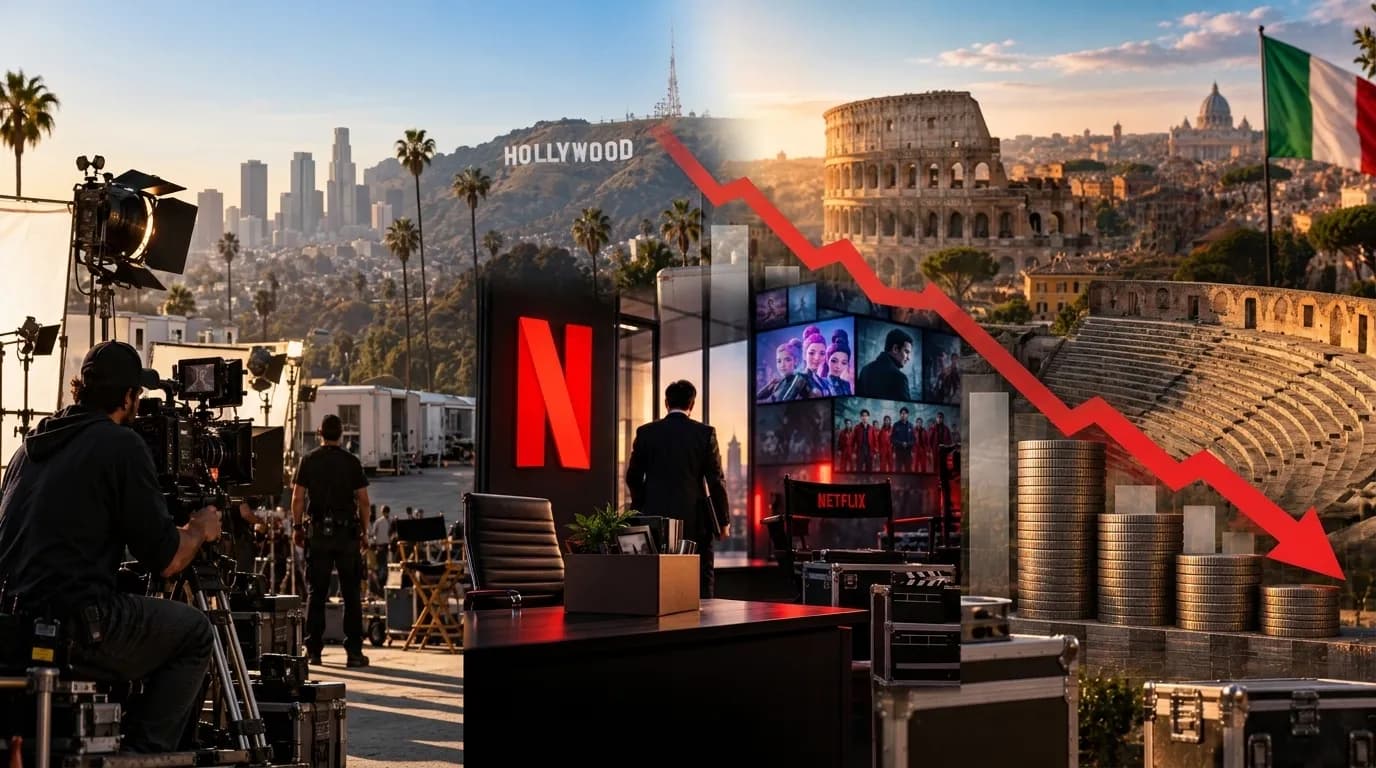

"The marketing budget of large companies for the year 2026 has dropped to 7.8% of total revenue."
What is the global marketing budget rate in 2026? According to official international reports, companies' allocated marketing budget has decreased, accounting for only 7.8% of total revenue. This is the lowest recorded level since 2020, when it reached 11%.
Why has the marketing budget decreased, and what do Chief Marketing Officers (CMOs) face? Due to rising labor costs and paid media, CMOs are forced to operate with a more limited budget. Furthermore, 94% of CMOs indicated that company leadership pressure and expectations on them have increased, especially in achieving tangible and fast results through the use of Artificial Intelligence.
How is the global marketing budget distributed in 2026? The primary distribution of marketing expenses is as follows:
Paid Media: 31.4% (an increase of 12.5% compared to 2024).
Labor: 24.5% (an increase compared to 21.9% in 2025).
Martech: 19.4% (a decrease compared to 22.4% in 2025).
Agency Spend: 19.2% (a decrease compared to 20.7%).
What percentage of the marketing budget is allocated to Artificial Intelligence (AI)? On average, 15.3% of the total marketing budget is allocated to the AI sector. Meanwhile, 70% of CMOs emphasized that developing and investing in AI will be among their top priorities for the second half of 2026.
What is the level of usage of "Autonomous AI Agents" by companies? Despite significant attention being given to this area, currently only 8% of companies manage their campaigns through autonomous AI agents. In contrast, 42% of companies use this technology only to perform daily tasks previously done by humans.
How do companies optimize their content for AI Search? Instead of cutting online advertising budgets, companies are changing how they spend their organic content budgets. They are now focusing more on producing content that is technically structured so that Large Language Models (LLMs) can rely on it as a citation.
For example: When contracting with a marketing agency, Butterball brand's main condition was that the agency have full proficiency in "brand visibility and recognition within AI systems."
Is follower count still an important metric for marketers? No, follower count is no longer as important as it used to be. Currently, only 17% of users care about a high number of followers, whereas 47% of users follow someone simply because of the content type and the person's level of expertise.
What is the impact of influencers and content creators on purchasing decisions? The impact is very strong; 67% of total users indicated that they bought a product due to a recommendation from a content creator. This impact is much higher among the new generation (Gen Z), reaching 81%. Also, 36% of people specifically follow small pages (Micro-influencers) to get purchase recommendations.